Your Head Is Showing
Keep liking and reposting crazy stuffs

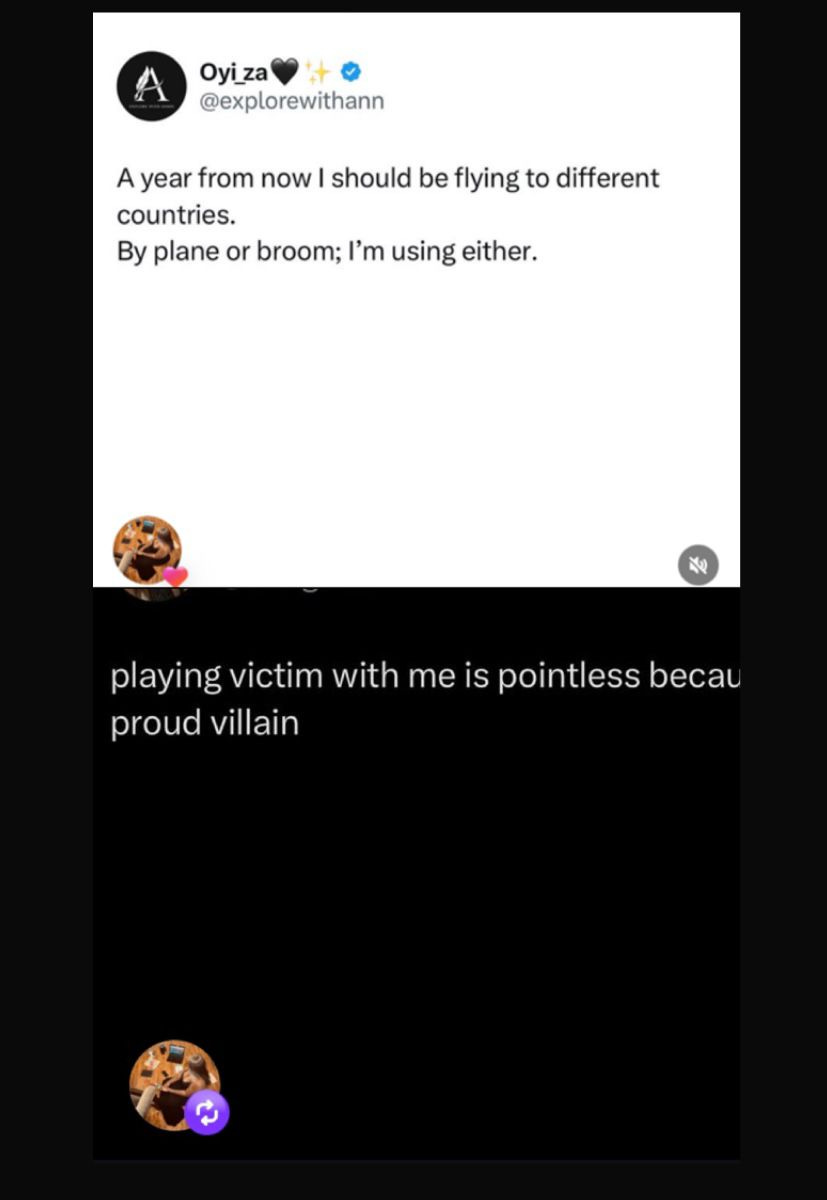
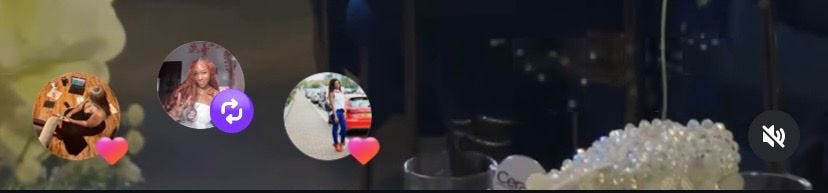
There is a specific kind of panic that comes from seeing your own face float to the corner of a post you probably should not have liked. A tiny, circular, undeniable confession. Your head, just sitting there. Witnessed.
I know this panic intimately. I am the person whose FYP is, at any given moment, a six-car pileup of heartbreak content, BDSM humour, food videos, feminist rage, and whatever rabbit hole I fell into at 2am because one post felt relatable and the algorithm decided that meant something. I like things impulsively. I reshare without ceremony. I have reposted the most unhinged content on my Instagram story and felt nothing because it is my social media, and whatever I put there should be nobody’s business but mine.
Except it is not working out that way anymore.
We used to have a concept called private curiosity. You could be interested in something, genuinely fascinated, darkly amused, morbidly attracted to an idea and that interest would live and die inside you. Nobody had to know. Shame, for all its damage, also gave people room to be complicated without consequence. Now the algorithm has done something quietly devastating: it has made your attention a public record.
The like button was never designed to be a confession booth. But that is what it has become. Every tap is logged, cross-referenced, and broadcast to the people who know you. Your friends see your head in the corner of the post about revenge cheating. Your mutuals catch you lurking on the most unhinged corners of relationship discourse. And suddenly everyone is a forensic analyst, building a profile of who you really are based on what you paused on for three seconds at midnight.
The problem is that attention has never been simple. I like BDSM content because it is funny to me, the performance of power, the theatrics of it, the absurdity. I reshare posts about men being terrible because sometimes they articulate something I cannot name yet, or because they are so extreme they loop back around to comedy. I spiral into heartbreak content when something in my chest is trying to process itself. None of this is a confession. None of this is an invitation to diagnose me.
But you cannot explain the difference between curiosity and endorsement in the two seconds before someone has already made up their mind.
I have watched this collapse people I know. A friend, straight, or so he says — keeps appearing in the corner of the most brazenly queer posts. I noticed. I clocked it the way you clock these things. And then I caught myself: I was doing the same math on him that people do on me, and I know how wrong that math is. Because I am also there, in corners I cannot explain, on posts that do not represent me, because I found them funny or sad or weirdly resonant or just because I was bored and my thumb moved.
The problem is not just the judgment itself. It is the architecture of the judgment. People have started applying old logic “as a man thinketh, so is he” — to a platform designed to trap your worst, most impulsive, most emotionally reactive moments and broadcast them. Social media is not a window into who you are. It is a window into what you were feeling at 11pm on a Tuesday when you had no one to talk to and the algorithm knew exactly what to put in front of you.
And yet.
I have had my own writing used against me. First-person essays turned into evidence. Notes taken out of context and sent to people who already wanted to think the worst of me. I have been told, only half-jokingly, that if I were ever in court, my Substack would bury me. I started a piece about a woman who does not confess to cheating and suddenly it is a confession. I reposted something about feminist rage and apparently that tells you everything about my character.
The irony is not lost on me. I am a writer. The whole point is to inhabit a thought fully, to follow an idea past the polite stopping point, to write things in first person that are not necessarily about me but feel true in the moment of writing them. That is the job. But nobody extends that grace when they are building a case.
So I changed. Not in the way I wanted to… not by growing or becoming more intentional but by shrinking. I stopped liking certain posts because I did not want my head to appear there. I started sending things directly to friends instead of resharing them publicly. There are corners of the internet I visit anonymously now, consciously, because I know what it looks like when someone sees you there.
And there is something deeply strange about that. About having to manage not just your actions but your curiosity. About training yourself out of the impulsive, lunatic, free-associating way that attention actually works in a human brain.
I know someone whose entire FYP is church content — worship sets, testimonies, scripture. A good person, by the algorithm’s reckoning. Nobody questions their character. And yet, privately, they send me the most unhinged reels. The kinky ones. The morally dubious ones. They just never like them publicly. They have figured out the system: perform one kind of appetite openly and indulge the other in the dark. It works. Nobody judges them.
That is the deal being offered, and I find it repulsive. The deal is: be legible, be palatable, manage your visible consumption carefully, and you will be allowed to exist without constant interpretation. The people who shame you are not interested in who you actually are. They are interested in whether you are performing goodness correctly.
I am retired from that performance. But retirement does not mean immunity. I still feel the consequences. I still catch myself hesitating before I like something. I still have people who saw my head in a corner they did not expect and decided they knew something.
Here is what I keep turning over: we have produced so much content, shared so much, validated so many contradictory positions simultaneously, that nobody actually knows what anything means anymore. You can be wrong and find seventeen posts that confirm you are right. You can be the villain and scroll until the algorithm hands you a narrative where you are not. I have done this. I have sat with a feeling I knew was not clean, found a post that cosigned it, and felt briefly better. The validation was real. The original wrongness was also real. Both things existed at the same time.
Social media has not made us better at knowing each other. It has made us faster at judging each other with incomplete information. The floating head in the corner is not a portrait. It is a data point. And we are out here building entire verdicts from data points.
I do not have an answer for this. I do not know how you fix an architecture that was designed to surface and spread attention at scale and then ask it to also protect nuance. I do not know how you stop people from using your curiosity as a weapon, especially when they have already decided who you are.
What I know is that I am a different person at 11pm when the algorithm has me in a spiral than I am in daylight, writing, thinking clearly, being myself. Both are real. Neither is the whole picture.
Your head is showing. So is everyone else’s. And none of us look the way we think we do from the outside.
That is the part nobody is talking about.
JoyzTheLostWriter❤